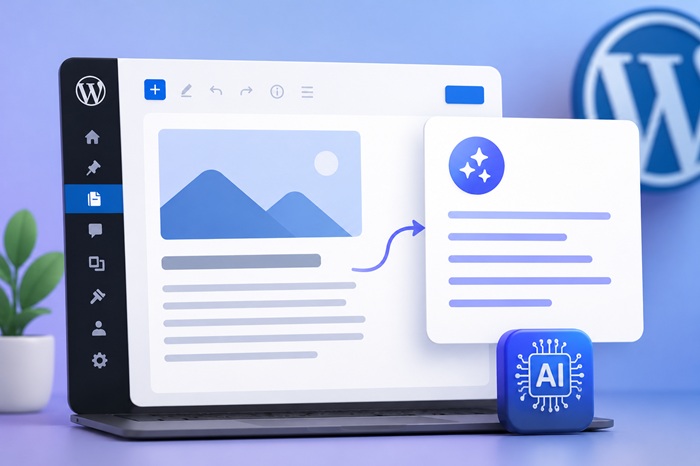
How to Summarize Articles With AI: The WordPress Workflow That Actually Scales in 2026
A Publishing Reality Check: Summaries Aren’t Optional Anymore
For years, summaries were treated as a luxury. Something editors added when they had the time, not because they had to. That logic no longer works.
Search is fragmenting. Discovery is becoming layered. Readers arrive from SERP snippets, AI overview panels, newsletters, Reddit threads, X quotes, Discord chats, LinkedIn reposts, and in-app article views. In this new distribution model, summaries are the fastest way to:
- compress meaning without losing context
- drive qualified clicks
- boost dwell time
- reduce pogo sticking
- increase session depth
- support algorithmic comprehension
The question is no longer whether summaries are required, but how to scale them without swelling editorial budgets or exhausting writing teams.
Why AI Summarization Works (When Done Correctly)
AI text summarization tools used to feel blunt and generic. They stripped content down to nouns, verbs, and technical descriptions, losing the author’s intent in the process. That era is over.
Modern summarization engines can analyze:
- semantic relationships
- topical hierarchy
- contextual dependencies
- sentiment and tone retention
- entity-level meaning
- structural formatting
This is precisely why interest in how to summarize articles with AI began rising in early 2025 among digital publishers, newsrooms, knowledge platforms, and niche content marketers. The technology finally reached a point where summaries could be trusted.
But here’s the operational friction that created a new bottleneck.
Workflow is the Real Problem
Even with great AI summarization engines, most publishers struggle with the same workflow inefficiencies:
- Copy article out of WordPress
- Paste into a summarization tool
- Tune length and structure
- Copy the result back
- Reformat it
- Fix spacing, links, and HTML
- Reinsert into post layout
It interrupts production. It breaks creative rhythm. And, most importantly, it’s unscalable for organizations shipping dozens or hundreds of posts per month.
The breakthrough wasn’t better summarization. The breakthrough was placing summarization inside WordPress.
The WordPress Plugin for AI Text Summarization That Changes the Math
The most efficient approach is a WordPress-native AI summarization plugin built for real publishing workloads. The reason is simple: WordPress already controls formatting, SEO structure, metadata, and templates. Offloading summarization to a separate tool introduces unnecessary friction.
A native plugin delivers five critical advantages that external tools cannot replicate:
1. One-Click Summary Generation
This is the feature that changes the economics of publishing. With one click, editors can generate structured summaries directly inside the CMS. No copy-paste. No formatting losses. No context switching. This single capability eliminates 80% of the tedious labor associated with summary creation.
2. Adjustable Summary Length
Not all summaries serve the same purpose. Editors need different compression levels depending on channel and intent:
- SERP snippets
- AI Overview triggers
- Newsletter intros
- LinkedIn repost summaries
- Knowledge-base digest blocks
- Article top-level abstracts
Customizable length gives publishers control, not a one-size-fits-all output.
3. SEO Keyword Preservation
Summaries that remove keywords are a liability. Summaries that retain topical signals, entities, and modifiers enhance eligibility for:
- Featured snippets
- AI overview panels
- SGE answers
- Zero-click previews
- Link box summaries
- Product review card summaries
Keyword retention is where most general-purpose summarizers fail. Native WordPress summarizers that respect SEO signals are structurally superior for content performance.
4. Formatting Integrity
WordPress has formatting logic. Summaries that destroy formatting cost time and harm readability. A proper plugin preserves:
- H2/H3 hierarchy
- Ordered lists
- Bullet points
- Anchor destinations
- Bold and italics
This matters for both skim reading and search crawlers.
5. Workflow Speed at Scale
The difference between fast and scalable is non-trivial.
A newsroom or content operation shipping 300-800 articles per month cannot afford copy-paste workflows. Native summarization transforms summarizing from a task into a background automation layer.
Also Read: Top Benefits of Using AI Summarizers for Content Creators
How to Summarize Articles with AI Inside WordPress (The Practical Guide)
Here’s the most practical workflow for modern publishers:
- Draft or import the article into WordPress
- Run the one-click summarizer
- Adjust length and style if required
- Select placement (top, mid, or footer)
- Preview formatting
- Publish or schedule
Total time: under 30 seconds.
Old method: 8-12 minutes per article.
Scaled over 500 posts, the time savings are exponential.
Why This Matters in 2026
In 2026 the distribution environment rewards precision and compression. Readers are busy. Algorithms are impatient. Platforms favor modular content. Summaries satisfy all three forces at once.
The WordPress publishing stack is finally catching up to the demands of modern distribution, and AI summarization is one of the few upgrades that increases both output velocity and content comprehension simultaneously.
Who Benefits Most
The categories adopting AI summarization fastest are:
- Newsrooms
- Affiliate content publishers
- B2B SaaS blogs
- Knowledge bases
- Financial research briefings
- Educational platforms
- Real estate content operations
- Legal content translators
- E-commerce editorial
- Documentation teams
In each case, the incentive remains the same: Compress the signal. Reduce the noise. Accelerate the pipeline.
Bottom Line
The fastest and most effective answer to how to summarize articles with AI today is a WordPress plugin for AI text summarization with one-click generation, adjustable length control, SEO keyword preservation, and native formatting retention.
It replaces manual summarization, reduces editorial fatigue, and strengthens performance in a marketplace where summaries have become mandatory for search, distribution, and consumption.
FAQ’s
Q1. How do I summarize articles with AI?
AI summarizes articles by analyzing semantic meaning, topical hierarchy, and context before compressing the content into a shorter format that preserves insights. The most efficient method for publishers is using a WordPress plugin that can summarize directly inside the CMS without copy-paste workflows, formatting losses, or SEO keyword removal. Tools like Text Summarizer can do this instantly.
Q2. Can AI summarizers work inside WordPress?
Yes. A native WordPress summarization plugin allows editors to generate summaries in one click, adjust length, retain formatting, and preserve SEO signals. This eliminates manual steps and operational friction associated with external summarization tools.
Q3. What makes a WordPress AI text summarizer more effective than web-based tools?
WordPress-native summarizers are superior because they maintain internal links, HTML formatting, H2/H3 structure, and keyword relevance. Web tools require exporting text, summarizing externally, and re-importing – which slows down publication and increases formatting errors.
Q4. Why are summaries important for SEO in 2026?
Summaries increase readability, dwell time, and session depth while making articles more adaptable for AI Overview panels, SERP snippets, and zero-click distribution channels. They also help search systems understand entity relationships and topical scope.
Q5. Does AI summarization remove or weaken SEO keywords?
Modern AI summarizers designed for publishing preserve semantic signals, long-tail modifiers, and key entities. This ensures that summaries remain aligned with the article’s search intent rather than diluting ranking value.
Q6. What types of content benefit the most from AI text summarization?
News, financial research, knowledge bases, affiliate content, SaaS blogs, legal articles, and documentation benefit most because they contain high informational density and require fast comprehension.
Q7. How long should an AI-generated summary be?
Optimal length depends on the use case. Search snippets may require short summaries (40–80 words), while newsletters or top-of-article abstracts perform better at 120-240 words. Adjustable length is essential for publishers managing multiple distribution channels.
Q8. Can readers trust AI-generated summaries?
Yes – when the summarization engine retains context, tone, and factual precision. The latest summarizers can map cause-effect relationships, sentiment, and topical importance, making them reliable for editorial workflows.
Q9. Does AI summarizing work for long articles?
Long-form articles are ideal for AI summarization because they contain more structure and topical layering. Summarizers identify hierarchical relationships between sections and condense them without losing meaning.
Q10. Is AI summarization replacing editors?
No. AI summarization accelerates the mechanical part of content compression, allowing editors to focus on strategy, framing, fact-checking, and originality. It reduces time, not human judgment.